
I'm Looking for...
This post contains links through which we may earn a small commission should you make a purchase from a brand. This in no way affects our ability to objectively critique the products and brands we review.
Evidence Based Research To fulfill our commitment to bringing our audience accurate and insightful content, our expert writers and medical reviewers rely on carefully curated research.
Read Our Editorial Policy
Blood sugar isn’t just something people with diabetes need to think about. Only 12% of Americans are considered metabolically healthy, which means most of us could use some help keeping blood sugar in check.
When blood sugar is constantly out of balance, it doesn’t just affect your long-term health—it shows up in your day-to-day life. Mood swings, low energy, restless sleep, stubborn fat gain, and even brain fog can all be traced back to constant spikes and crashes.
Fortunately, with a few simple shifts to your daily routine, you can balance your blood sugar and feel the difference, including steadier energy, sharper focus, and better control over cravings.
While these tips can be helpful, if you want personalized guidance and a plan tailored to your unique needs, consider scheduling an appointment with one of our Registered Dietitians today.
Blood sugar is simply the amount of glucose (aka sugar) in your bloodstream. Glucose comes from the food you eat, mainly carbohydrates, and it’s your body’s main source of fuel. Every single cell in your body runs on glucose—especially your brain.
But here’s the key: your body works best when blood sugar stays in a healthy, steady range.
When blood sugar spikes too high, your pancreas pumps out insulin to bring it back down. But if this happens often, your body has to release more and more insulin. Over time, your cells stop responding well—a state called insulin resistance.
When it dips too low, you might feel shaky, tired, or irritable. These constant ups and downs can leave you with cravings, fatigue, irritability, and, over time, a higher risk for insulin resistance, prediabetes, type 2 diabetes, Alzheimer’s disease, and more.
But keeping blood sugar balanced isn’t just about avoiding disease—it’s also about feeling better every single day. This means steadier energy, better mood, easier time losing weight, fewer afternoon crashes, and more control over cravings.
Let’s take a closer look at the top nine tips for balancing blood sugar.
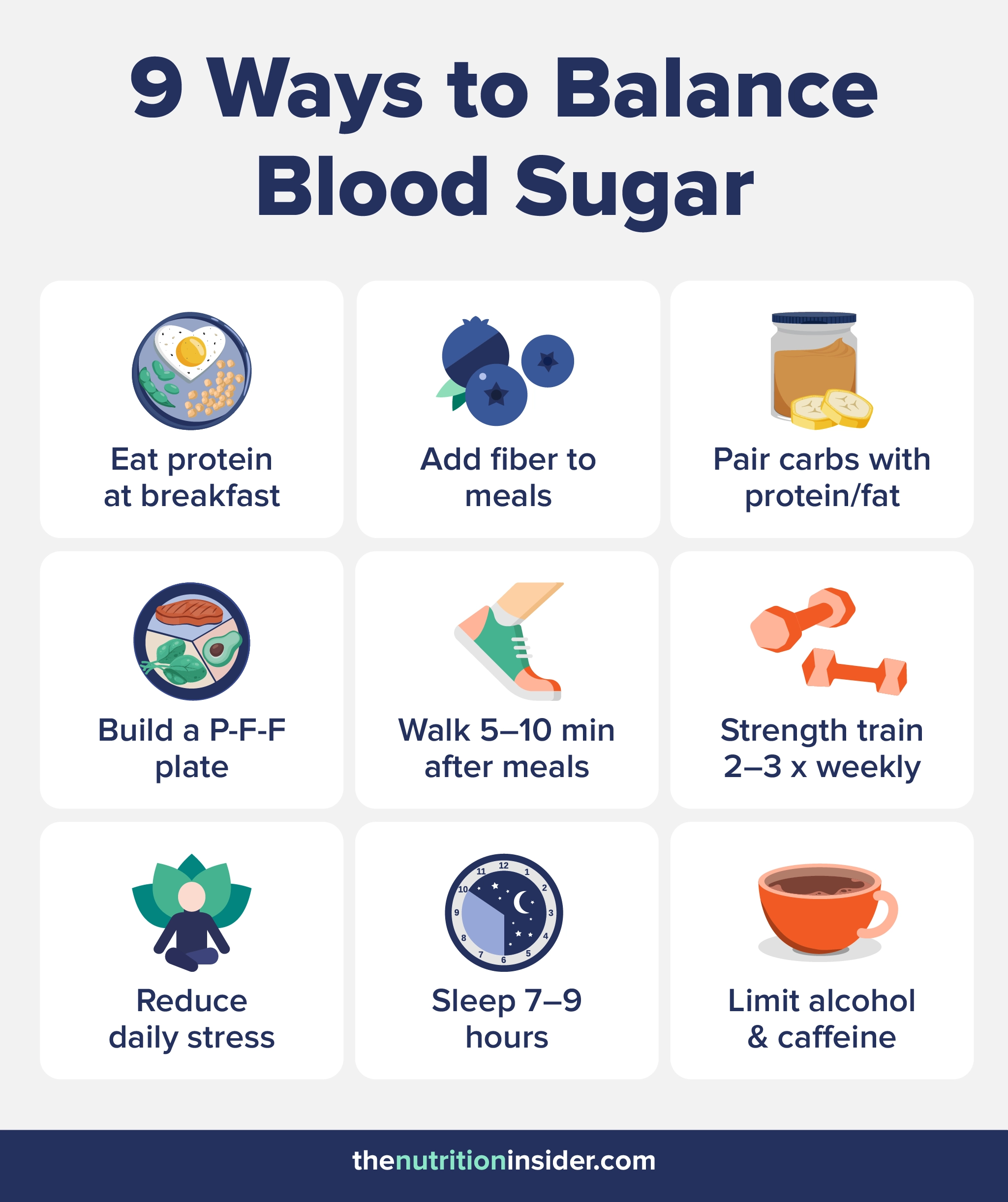
Eating protein at breakfast is one of the smartest health moves you can make—not just for blood sugar balance, but also for reducing cravings and appetite throughout the entire day.
This is because protein slows digestion, keeps you fuller for longer, and helps prevent the mid-morning crash that often comes from carb-heavy breakfasts like cereal, bagels, or pastries.
Getting 25-30 grams of protein at breakfast sets the tone for steadier blood sugar levels, fewer cravings, and more consistent energy throughout the day. However, you may need to adjust this amount based on your body size and needs—meet with a Registered Dietitian (RD) to see what your specific needs are.
Think of it like “front-loading” your day. When you give your body enough protein first thing, everything else runs smoothly.
Fiber is often overlooked, but it plays a significant role in regulating blood sugar levels. It works by slowing down digestion, preventing spikes in blood sugar after meals, keeping you fuller for longer, and supporting gut health.
Most Americans get only about 7 grams of fiber per day—far below the recommended 25g for women and 38g for men (or 21g and 30g after age 50)—making steady blood sugar harder to maintain.
You don’t need to overhaul your entire diet at once—in fact, you shouldn’t, as a huge jump in fiber intake when you aren’t used to it can cause some uncomfortable digestive symptoms.
Start by adding 1-2 fiber-rich foods per day in ways you’ll actually enjoy until you reach the recommended 25-38 grams per day. Here are some examples:
Even small changes can add up. The key is consistency and choosing high-fiber foods you actually like and will eat.
A “naked carb” is any carbohydrate-rich food that doesn’t have protein, healthy fat, or fiber paired with it. Eating carbs this way can lead to quick blood sugar spikes, followed by crashes, cravings, and energy dips.
The solution is simple: give your carbs some “clothes.” Add protein, healthy fat, or fiber to slow digestion, keep your blood sugar steadier, and help you feel fuller longer.
Here are some real-life examples:
These small additions make a huge difference—they keep your blood sugar steadier, reduce mid-meal crashes, and help you feel satisfied longer.
The beauty of this method is that you don’t have to eliminate your favorite foods—if you love pasta, you don’t have to restrict yourself; simply “put some clothes on it” to make it more blood sugar-friendly.
“P-F-F” is an acronym that encompasses the previous tips into a simple formula you can use at every meal: Protein, Fat, and Fiber.
Each piece of the P-F-F puzzle plays a role in steadying blood sugar:
Rather than counting carbs or calories, ensuring your plate is “P-F-F Style” can be a simpler way to balance your blood sugar and create diabetes-friendly meals.
Most people sit or lounge after a big meal—but that’s one of the worst things you can do for your blood sugar.
Rather, moving after a carb- or sugar-rich meal is one of the simplest, most powerful, and free ways to reduce a blood sugar spike.
You don’t need a full workout or even running shoes. Just 5-10 minutes of movement makes a difference. This could be a walk around your house or block, some squats or jumping jacks, or even simple calf raises.
Research shows that the soleus muscle in your calves is especially efficient at using glucose. Just 20-30 calf raises after a meal may help blunt a spike and improve metabolic control—you can even do them in your PJs while watching TV.
Walking (or calf raising) after a meal is great for lowering blood sugar in real time. But strength training is best for promoting long-term metabolic control and reducing your risk of metabolic diseases.
Your muscles act like sponges, soaking up glucose from your bloodstream—and the effects last long after you’ve finished your workout.
That means a morning strength session can actually help your body handle dessert at night. The more muscle you build, the better equipped your body is to keep blood sugar steady.
But you don’t need a gym or heavy weights to see benefits. Even bodyweight moves like squats, push-ups, or planks improve muscle strength and insulin sensitivity.
Just 2-3 short sessions per week can make a noticeable difference—not only for blood sugar, but also for metabolism, bone health, cognitive function, mood, and cholesterol levels.
A single strength workout also boosts your body’s ability to manage blood sugar right away. Over time, building and maintaining muscle helps protect against age-related muscle loss, keeping you strong and independent as you age.
Stress impacts blood sugar a lot more than people realize.
Your main stress hormone is called cortisol. It’s essential in small amounts—without it, we’d never get out of bed in the morning or be able to respond quickly in dangerous situations.
The problem comes when cortisol stays too high for too long, keeping your body in a constant state of “fight or flight.”
Elevated cortisol raises blood glucose levels. It’s a survival mechanism that gives our muscles quick energy to fight or flee.
However, in modern society, this process can happen even when we’re just stuck in traffic or our email inboxes are out of control.
This creates a vicious cycle: high cortisol levels lead to higher blood sugar, which puts more stress on your body.
Reducing stress is easier said than done, but there are some proven strategies that can help:
Some supplements like ashwagandha, L-theanine, and rhodiola show promise for supporting stress resilience—but research is still limited, and check with your doctor before starting anything new.
Sleep isn’t just about feeling rested—it’s a major player in blood sugar control and metabolic health. Just one bad night of sleep can make your body respond to sugar as if you were prediabetic.
Here’s what happens when you skimp on sleep: Your body becomes more resistant to insulin, making it harder to keep glucose steady.
Hunger hormones also get thrown off. Ghrelin (which makes you hungrier) rises, while leptin (which tells you you’re full) drops. This leads to stronger cravings, especially for carbs and sugar.
Overall, your ability to regulate blood sugar takes a hit, even after just one restless night.
Here are a few science-backed strategies for better sleep and steadier blood sugar:
Some supplements can help. Magnesium glycinate, glycine, or low-dose melatonin (0.5mg) may support sleep, but think of them as a boost on bad nights—not a replacement for good sleep habits. Always check with your healthcare provider before trying something new.
Alcohol and blood sugar have a complicated relationship. If you’ve worn a blood sugar monitor, you might have noticed that alcohol sometimes makes your blood sugar drop quickly—especially if you drink on an empty stomach.
This is because when alcohol is in your system, your liver pauses its normal job of releasing glucose into your blood so it can process the alcohol first.
But while alcohol can cause these short-term dips, they are not healthy—the bigger concern is what happens long-term.
Regular drinking can disrupt your body’s normal glucose and insulin regulation, interfere with sleep, which worsens insulin sensitivity, and increase your risk for prediabetes, type 2 diabetes, and fatty liver when overconsumed.
Caffeine also impacts blood sugar, as it stimulates cortisol and adrenaline—stress hormones that tell your liver to release glucose.
Some people are more sensitive to caffeine than others. Genetics, stress levels, sleep quality, and even hormones play a role in how strongly caffeine impacts glucose and insulin response.
Timing matters, too.
Drinking coffee or tea on an empty stomach is more likely to cause a glucose bump. Conversely, having it later in the day can disrupt sleep, which indirectly harms blood sugar control—and we know that poor sleep makes your body less insulin-sensitive the next day.
One easy hack is not drinking caffeine on an empty stomach—have protein, fiber, or healthy fats first to blunt its effects.
If you’ve been diagnosed with prediabetes, the goal is to keep blood sugar steady and improve insulin sensitivity. Focus on meals built around protein, fiber, and healthy fats, with fewer refined carbs and added sugars.
Fill your plate with:
The key is balance—not perfection.
Eating P-F-F style (Protein, Fat, Fiber) at each meal helps prevent spikes, curb cravings, and move your numbers back into the healthy range.
Keep in mind that blood sugar responses vary person to person. People with diabetes, prediabetes, or other metabolic conditions should consult a healthcare provider or RD before making significant changes.
Ready to take control of your blood sugar? Booking a consultation with a Registered Dietitian gives you personalized guidance that goes beyond generic advice.
An RD can:
Schedule a consultation with a TNI RD today and get a personalized plan that helps you feel energized, focused, and in control.
You can naturally balance your blood sugar by focusing on whole foods, eating protein, fiber, and healthy fats at every meal, staying active, managing stress, and getting quality sleep. Small, consistent lifestyle changes—such as walking after meals or engaging in strength training a few times a week—can make a significant difference. Limiting excess sugar, refined carbs, caffeine, and alcohol also helps keep glucose steady.
Common signs include frequent energy crashes, strong cravings (especially for sugar or carbs), irritability, brain fog, mood swings, and difficulty concentrating. Over time, you might also notice weight gain, poor sleep, or frequent hunger shortly after meals.
Healthy meals rich in whole, minimally processed foods are most effective. Focus on lean proteins, high-fiber vegetables, legumes, whole grains, and healthy fats, while limiting refined carbs and added sugars. Consistency and balanced meals (“Protein-Fat-Fiber” style) are more important than strict restriction.
Highly processed foods, sugary drinks, refined grains, sweets, and most fast foods can worsen insulin resistance. Foods high in trans fats and excess added sugars are particularly harmful. Refined carbs like white bread or pastries can spike blood sugar and should be limited.
There is no single food that reduces blood glucose—it’s more about the balance of your meal patterns. Foods that help lower blood sugar work by slowing digestion, improving insulin sensitivity, and reducing post-meal spikes. Create healthy meals with high-fiber foods like non-starchy vegetables, beans, lentils, whole grains, chia seeds, and flaxseeds; protein-rich options like eggs, fish, poultry, and Greek yogurt; and healthy fats like avocado, nuts, and olive oil. Combining these foods at each meal keeps your blood sugar steady and your energy more consistent throughout the day.
The Diabetes Plate Method is a simple visual tool to help balance blood sugar without counting or tracking. Fill half your plate with non-starchy vegetables, one-quarter with lean protein, and one-quarter with high-fiber carbs like beans, quinoa, or sweet potatoes. Add a serving of healthy fat, like avocado or olive oil, and you’ve created a diabetes-friendly meal that’s easy to build anywhere.

It’s rare that we take our focus off of wellness brands to feature and partner with multi-brand online retailers, but we made an exception for Hi-Health because of the value they can bring to our audience.
Read More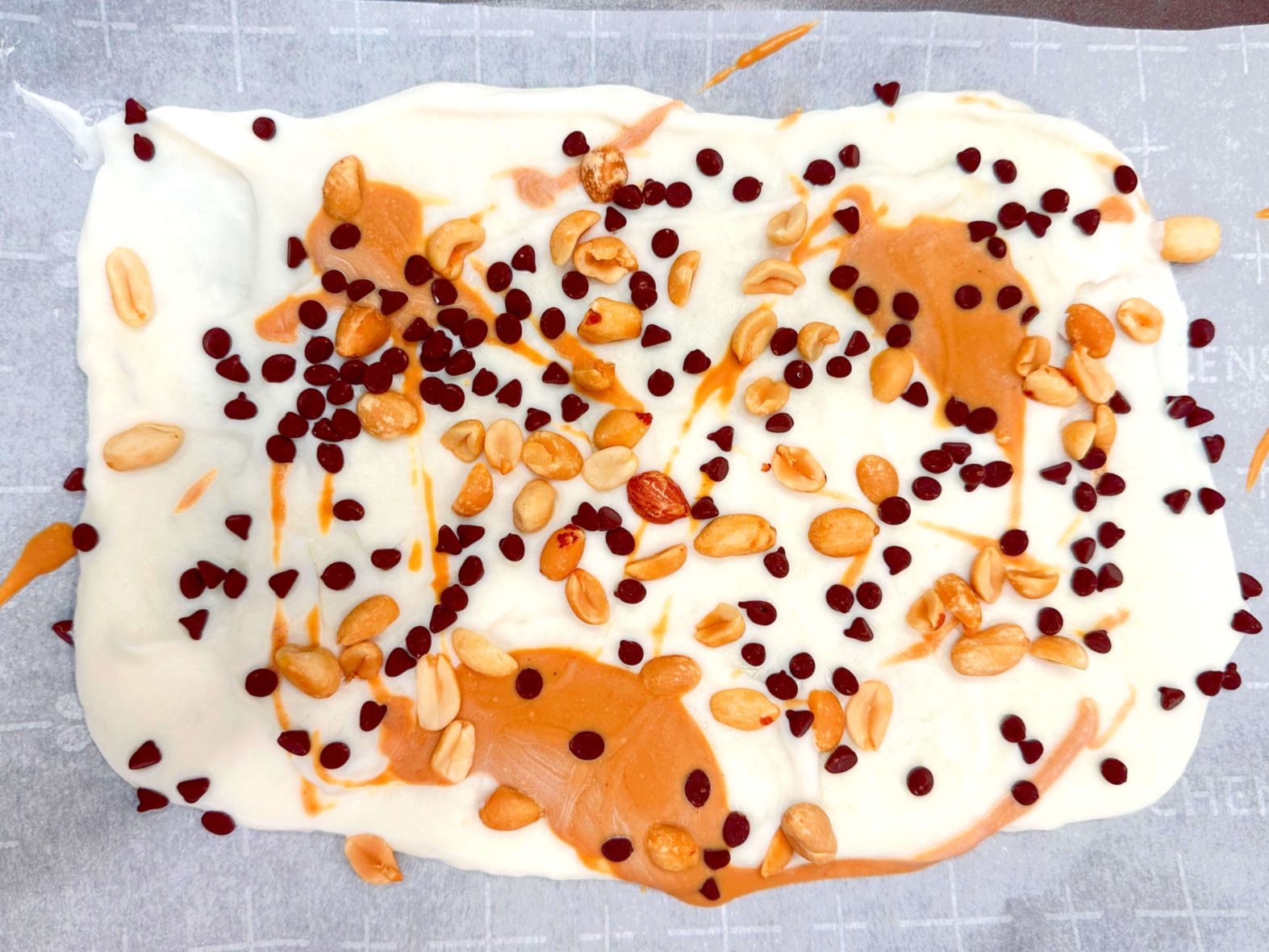
Yogurt bark is one of our favorite snacks because not only is it sweet and fun it’s also full of nutrients, like healthy fat and protein!
Read More