I'm Looking for...
Evidence Based Research To fulfill our commitment to bringing our audience accurate and insightful content, our expert writers and medical reviewers rely on carefully curated research.
Read Our Editorial Policy
In 2026, health and wellness trends are shifting away from extremes and toward habits that actually support energy, digestive health, metabolic health, and long-term well-being.
As a Registered Dietitian, here’s what I’m predicting for the year ahead—and why these top health trends are actually worth your attention.
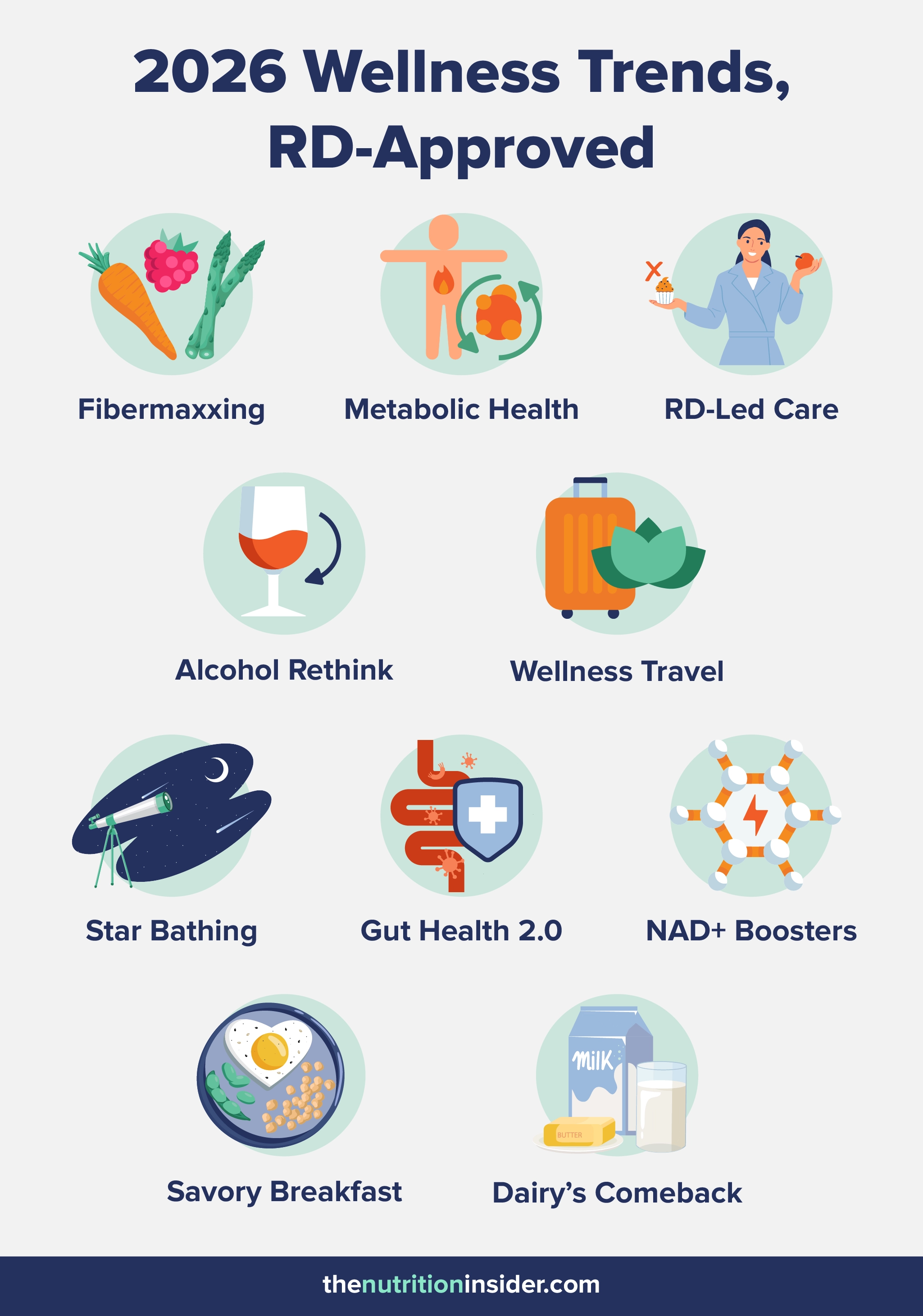
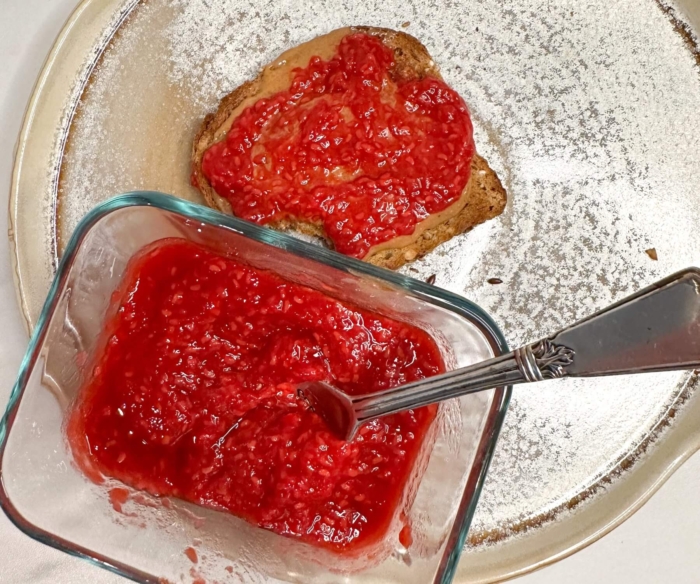
If you’re chronically online, you’ve probably seen the term fibermaxxing floating around wellness spaces. At its core, fibermaxxing refers to intentionally increasing fiber intake to support gut health, blood sugar regulation, cholesterol levels, and long-term metabolic health.
What does fibermaxxing look like in real life? Rather than chugging fiber supplements three times a day, fibermaxxing means eating more plant foods, more often—think beans, lentils, chickpeas, broccoli, cabbage, kiwis, berries, and seeds.
One important caveat: more isn’t better overnight. Increasing fiber too quickly can lead to bloating, gas, and embarrassing bathroom trips. A realistic approach is to add no more than 5 grams per day until you reach the recommended intake of 25 daily grams for women and 38 grams for men.
Metabolic health affects how you feel every day—not just your weight or lab results. It reflects how efficiently your body produces and uses energy, including blood sugar regulation, insulin sensitivity, cholesterol levels, blood pressure, and inflammation.
In real life, supporting metabolic health isn’t about extreme diets or “resetting” your metabolism. It’s built through boring-but-powerful habits: eating enough protein and fiber, spacing meals consistently, prioritizing sleep, moving your body regularly, and limiting alcohol. Small, repeatable choices matter far more than perfection.
Personalized nutrition is often marketed as DNA tests, food sensitivity panels, or AI-generated meal plans.
In reality, effective personalization comes from human expertise and context—the understanding of your health history, lifestyle, symptoms, and goals, then adjusting recommendations over time.
This is where Registered Dietitians (RDs) come in. RD-led care focuses on sustainable, real-world changes rather than rigid, one-size-fits-all rules. With ongoing guidance, your nutrition strategies can evolve based on preferences, blood sugar patterns, travel, stress, and life transitions—making virtual dietitian care one of the most practical ways to individualize nutrition in 2026.
At The Nutrition Insider, our RDs offer personalized support for weight management, diabetes, cardiovascular health, inflammation, and more. Reach out to book a consultation.
Younger generations are drinking less alcohol than those before them—and it’s a shift worth paying attention to.
Alcohol is being reexamined not as an all-or-nothing choice, but as a modifiable health lever. Many people are noticing how even moderate drinking can negatively affect sleep quality, focus, exercise performance, gut health, blood sugar regulation, anxiety, and overall energy, prompting a move toward alcohol-free or lower-alcohol routines.
Rethinking alcohol doesn’t have to mean lifelong sobriety or rigid rules. It can look like drinking less frequently, choosing alcohol-free alternatives, or being more intentional about when and why you drink.
Travel trends are shifting away from all-inclusive, booze-centered vacations toward wellness-focused getaways.
Instead of packed schedules or alcohol-heavy brunches, more travelers are prioritizing slower days, time outdoors, nutritious meals, meditation retreats, and better sleep—often returning home feeling noticeably better, not depleted.
Walking more, eating consistently, spending time in natural light, disconnecting from work, and lowering stress can positively influence metabolic health, digestion, sleep quality, and mood. A wellness vacation doesn’t require a luxury retreat; it can be as simple as choosing destinations and travel styles that support recovery rather than exhaustion.
You may have heard of forest bathing, or shinrin-yoku, the Japanese practice of mindful immersion in forests or nature. In 2026, star bathing is emerging as its nighttime counterpart.
Star bathing involves spending intentional time outdoors at night, looking at the stars or night sky, and is gaining attention as a simple way to support nervous system regulation. Unlike screen-heavy evenings, it encourages darkness, stillness, and a sense of scale or awe that can naturally lower stress and mental overstimulation.
Gut health is entering its next phase—moving beyond just popping probiotics and toward supporting the gut as part of a larger health system. Gut Health 2.0 shifts the focus from supplements alone to daily habits that influence digestion, immunity, metabolism, and even mental health.
In practice, this looks like prioritizing fiber diversity, incorporating fermented foods, eating consistent meals, managing stress, and supporting sleep.
Instead of quick fixes, the emphasis is on patterns that support a healthy gut microbiome over time—recognizing that digestion is deeply connected to lifestyle, not just what’s in your supplement drawer.
Interest in NAD+ boosters like NR and NMN continues to grow as conversations around longevity and cellular health move into the mainstream. NAD+ is a coenzyme involved in energy production and DNA repair, and levels naturally decline with age—making it a popular target for supplements and IV therapies.
That said, NAD+ precursors are not a magic pill and work best when framed realistically. While supplements like NR and NMN may play a role for some people, foundational habits—adequate sleep, regular movement, balanced nutrition, and metabolic health—have a far greater impact on how the body produces and uses NAD+.
In 2026, the trend is shifting away from quick fixes and toward using NAD+ strategies as a complement to, not a replacement for, healthy lifestyle practices.
Savory breakfasts are gaining momentum as more people move away from sugar-heavy morning meals. Starting the day with protein, fiber, and healthy fats—rather than primarily refined carbohydrates and sugar—can support steadier blood sugar, improved energy, and better appetite regulation throughout the day.
In practice, a savory breakfast might look like eggs with vegetables, cottage cheese with olive oil and herbs, savory oats, or even leftovers from dinner. The goal isn’t to eliminate carbohydrates, but to anchor the morning meal with enough protein and fiber to support metabolic health and reduce mid-morning crashes.
Dairy has gotten a bad reputation in recent years alongside the rapid rise of non-dairy alternatives—but cow’s milk and traditional dairy foods are finding their way back into the conversation in 2026. Many people are reexamining dairy for what it offers: high-quality protein, calcium, and beneficial fats in a familiar, accessible form.
This shift isn’t about dismissing non-dairy options (oat milk lattes are delicious, after all) or suggesting dairy works for everyone. Instead, it reflects a broader move away from blanket food demonization and toward individualized tolerance. For those who digest it well, dairy—especially fermented options like yogurt and kefir—can be a valuable, nutrient-dense part of a balanced diet.

What is psyllium husk and how can it help your gut? Learn more about this dietary fiber and the benefits it can bring to your daily routine.
Read More
What is pilates? Learn more about this popular workout style and its benefits to your health.
Read More